Burn
Hardwood is burned down to hot coals, creating the clean, steady heat that feeds the pit.
 Stay Around the Fire
A South Carolina Tradition
Whole hog. Wood coals. Vinegar and pepper. Time enough to do it right. In South Carolina's Pee Dee, barbecue is more than a style of cooking. It's a tradition built to gather people.
First Things First
In South Carolina, barbecue has a language of its own.
Across the state you'll find different sauces, methods, and loyalties. But in the Pee Dee—the broad northeastern region shaped by the Great Pee Dee River and the communities around it—one of the enduring traditions is whole-hog barbecue.
Not a rack of ribs thrown on a grill. Not a pork shoulder cooked for a few hours and covered in a thick sauce. Whole-hog barbecue asks more of the cook.
A whole animal. A live fire. A long night. And the patience to let each part become something worth sharing.
Whole hog isn't a slogan. It's the method.
The Work
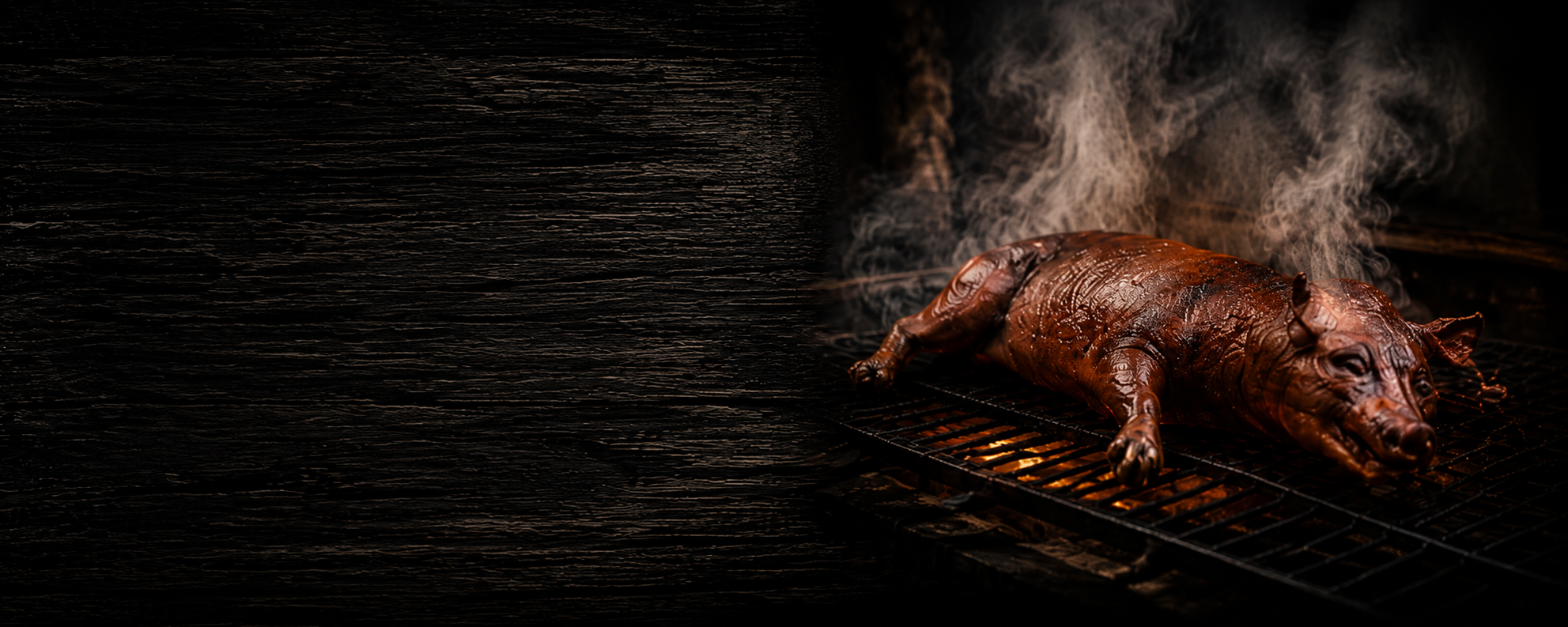
Traditional whole-hog cooking begins before the pig ever reaches the pit. Hardwood is burned down into glowing coals. Those coals are moved beneath the hog and tended over hours of slow cooking. Heat is managed by feel, experience, and attention—not by rushing the process.
Hardwood is burned down to hot coals, creating the clean, steady heat that feeds the pit.
The hog cooks low and slow while the pit is watched and fresh coals are added where they're needed.
Vinegar, pepper, and other seasonings cut through rich pork and become part of the cook rather than hiding it.
When the work is done, the different cuts are picked, pulled, or chopped together and shared.
About the Sauce
Pee Dee barbecue isn't defined by one bottled formula. Traditions vary from pit to pit and town to town. But vinegar and pepper have long been at home with whole-hog pork in this part of South Carolina.
A thin sauce works differently from the thick, sweet barbecue sauces many people know. It moves through the meat instead of sitting on top of it. The vinegar brings brightness to rich pork. Pepper brings heat and depth. Other ingredients may round out the sauce, but the pork and the pit are still supposed to speak.
The sauce should serve the barbecue—not cover it up.
South Carolina's barbecue geography is wonderfully messy. Vinegar-and-pepper, light tomato, mustard, and heavy tomato traditions overlap, and modern boundaries are less rigid than any map suggests. That's part of the story, not a flaw in it.
Why the Whole Hog Matters
Cooking the whole animal isn't simply a larger version of cooking a shoulder. Hams, shoulders, belly, loin, and other cuts carry different textures, fat, and flavor. Bringing them together creates barbecue with a character no single cut can quite reproduce.
There's something else in the method, too: respect. Whole-hog cooking comes from an agricultural world where an animal represented food for a community and waste was a luxury people could ill afford.
The method survives because people kept doing the work and teaching someone else how to do it.
More Than a Cooking Method
Whole-hog barbecue makes sense at a gathering. It is food on a communal scale—something that takes time to prepare and makes enough to call people over when it's ready.
That is one reason the tradition matters to Oak & Iron. The technique is worth preserving, but so is what happens around it: people working together, waiting together, eating together, and passing down the knowledge required to do it again.
You can't bully a whole hog into being ready. The fire sets the pace.
Managing coals, heat, seasoning, and the animal itself rewards attention earned through practice.
The work ends where Oak & Iron begins: with food on the table and people gathered around it.
Our Place In It
Oak & Iron isn't here to claim Pee Dee barbecue, modernize it beyond recognition, or turn generations of practice into a marketing costume.
We're here because this tradition was shared with us, and we believe things worth receiving are worth learning, tending, and passing on.
LP's Pee Dee Pit Sauce is our first provision born from that responsibility. It is being developed for the kind of pork that inspired it and with respect for the tradition behind it.
We didn't invent the tradition. We're here to help keep it alive.
Meet LP's Pee Dee Pit SauceFood. Fire. Fellowship.
Burn the wood. Tend the coals. Feed the people. Teach the next person. Then do it again.
Why Oak & Iron ExistsThis page is an introduction, not the final word on a living regional tradition. For more on South Carolina barbecue, explore the South Carolina Department of Parks, Recreation & Tourism's whole-hog overview and its guide to South Carolina's barbecue sauce traditions.